
Author, The Happiest Man in the World: Life Lessons from a Cultural Economist
On the border of Ukraine and Romania, near the town of Gura Humorului, surrounded by orchards of peach, cherry, apple, and pear trees, is a large community of artistic “tinners.” While visiting the area, I discovered that the Ukrainian, Russian, and Romanian metal workers of that area historically possessed unique abilities to design and build ornate roofs of crafted sheet metal. Their homes, barns, gazebos, and even outhouses displayed roofs of stunning architecture and art form. The beautiful buildings were definitely influenced by the architecture of the old Orthodox churches, and each building delivered a pronounced message of the owner’s belief and support of the old Orthodox Christian institutions. They were eminent statements of status.
Several months later, I was traveling through the West African country of Cameroon. About 5:30 Saturday morning, I was able to negotiate for a small loaf of French bread, butter, and a cup of hot tea. My driver, Vincent, had been up early and had the Toyota SUV washed and filled with diesel for our eight-hour trip from the seaport city of Douala, north to the Mbingo hospital close to the border of Nigeria.
We took the seaport route out of Douala, a bustling city of two and a half million people, and successfully dodged pot holes and unpredictable Saturday morning market traffic. We made our way through sleepy African towns of Limbe, N’Kongsamba, and Kunba. As we approached the city of Bafoussam, I noticed certain houses that had high-pitched metal roofs made of shiny sheet metal, usually with a design similar to a weather vane on top. Some compounds had several of the peaked roofs, and others had, maybe, only one or two, and some had no peaked metal roofs at all.
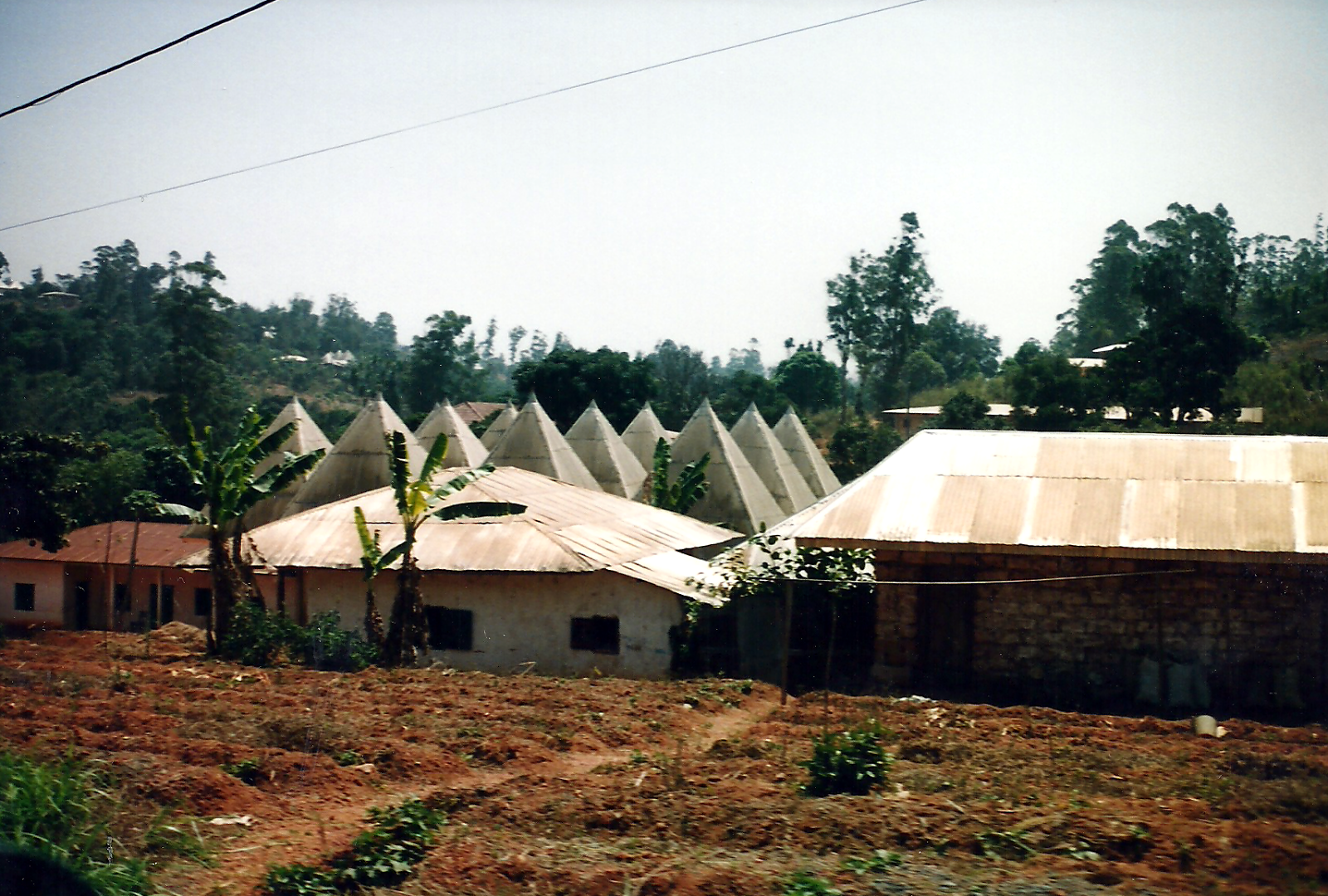
I was aware of the Muslim influence in that part of West Africa, and asked Vincent if the steep square roofs of metal had anything to do with Muslim culture?
“No,” replied Vincent, “in this western region of Cameroon the culture only allows you to place one of those steep metal roofs on your buildings if you have reached a certain level of wealth. They are symbolic of castles or royalty. You must pass the wealth test, and then the other wealthy people of the area give you permission to build a steep roof. The more wealth you have the more steep roofs you are allowed to build. That is why some compounds have six or eight roofs and others only have one, and some have none. It is necessary for the real rich to constantly keep building outbuildings just to display more roofs as a status symbol of wealth.
As we entered Bafoussam, I asked Vincent what he meant by wealth. “How wealthy are the people of Bafoussam in comparative value?”
“The people of Bafoussam are everywhere in Cameroon, but their real homes are in this western region of the country.” He went on, “about all the buildings in Douala, and the capital city of Younde, are owned by the people of Bafoussam. Nearly all the construction companies are owned by them. They pretty much control the wealth of the country, and these peaked roofs send out that message.”
A status symbol is a visible, external message of one's perceived social or economic position.
What people employ as status symbols will differ between countries and cultures based on what is considered valuable to them. It is not unusual that status symbols even change over time. Anna Marie and I love to visit the historic homes and castles throughout the world. Before the invention of the printing press, owning a large collection of books was considered an impressive status symbol. With time, books became a less-recognized or rarefied status symbol.
Possessions typically perceived as status symbols in our culture may include a large house or penthouse apartment, a second home or ski chalet, haute couture fashionable clothes, some number of luxury vehicles, a trophy wife, a sizable collection of high-priced artworks or antiques, a privately owned aircraft or a luxury boat that is moveable from one status location to another. Even a securely tenured position at a prestigious university or research institute can be flaunted as a mark of high status.
Ancient Central American Mayan cultures artificially induced crosseyedness and flattened the foreheads of high-born infants as a permanent, lifetime sign of noble status. In the Middle East, and especially in the northern tier of African countries, the women use the application of henna on their bodies as status artwork. They like it because it does not wash off, but eventually disappears so that they can start over with new designs. However, they are some of the first persons to come to our free health clinics complaining of permanent liver problems. The blood that carries the henna designs away from the skin deposits the dye in the liver. That can be fatal.
The employment of status symbols can be a very tricky activity, indeed. Many times an individual is capable of buying the status symbol solely to impress others, but does not possess the personal wealth that is implied by the symbol. Charles Spurgeon, the theologian of another era, warned the people of his day, “No one is so miserable as the poor person who maintains the appearance of wealth.” Robert Frank penned an article in the Wall Street Journal regarding our recent financial crisis: “If the financial crisis has a silver lining, it is the decline and fall of the overpriced, over-hyped status economy. You know, the one built on bling and Hummers and Louis Vuitton for the masses. The past decade may have had its excesses, but none was as stupefying as the $300,000 watch that doesn’t tell time.”
Usually, status symbols will give insight into the value system of a culture or subculture. The symbols represent what most people in the culture or society can’t afford to own or indulge in … but wished they could. And, it is but of my own folksy observations, that status symbols wouldn’t even be effective were it not for our human capacities of envy, lust, and discontent. I rather like the advice of ancient Socrates: “If a rich man is proud of his wealth, he should not be praised until it is known how he employs it.”
“Possessions, outward success, publicity, luxury - to me these have always been contemptible. I believe that a simple and unassuming manner of life is best for everyone, best for both the body and the mind.” That quote was Albert Einstein’s view of wealth and symbols of status. I would say that’s some pretty intelligent advice from a pretty intelligent fellow.
 Dr. James W. Jackson often describes himself as "The Happiest Man in the World." A successful businessman, award-winning author and humanitarian, Jackson is also a renowned Cultural Economist and international consultant, helping organizations and governments to apply sound economic principals to the transformation of culture so that everyone is "better off."
As the founder of Project C.U.R.E., Dr. Jackson traveled to more than one hundred fifty countries assessing healthcare facilities, meeting with government leaders and "delivering health and hope" in the form of medical supplies and equipment to the world's most needy people. Literally thousands of people are alive today as a direct result of the tireless efforts of Project C.U.R.E.'s staff, volunteers and Dr. Jackson.
To contact Dr. Jackson, or to book him for an interview or speaking engagement: press@winstoncrown.com


